
Sections
Popular watch types
Popular features
Popular materials
Sections
Popular watch types
Popular features
Popular materials
Wristwatch
Celebrating the most historically, technically and culturally important wristwatches
Share this page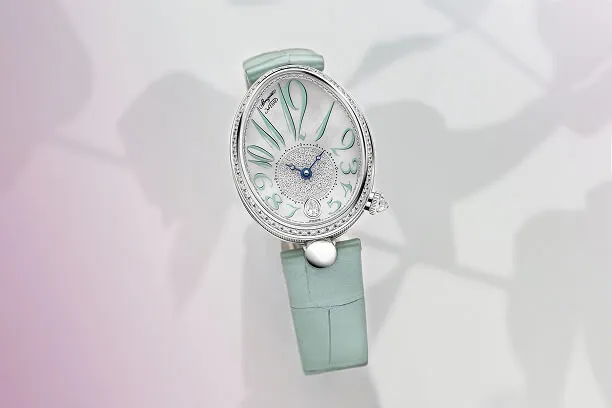
Breguet No. 2639
The first documented wristwatch
In the Breguet archives there is the first documented watch built for the wrist, ordered by Caroline Murat, the Queen of Naples and one of Breguet's best clients in 1810 and delivered in 1812.
Not much is known about the watch itself but is described in the order as "an ultra-thin repeating watch, oblong in shape, equipped with a thermometer and mounted on a wristlet of hair entwined with gold thread".
We don't have any other indicator of what the watch looked like, unfortunately, however Breguet created the Reine de Naples collection of watches in the spirit of that watch in 2002 and is still ongoing.
Sources
Patek Philippe
The first Swiss wristwatch
For a while this watch was considered the first wristwatch in history by the Guiness world records and you might find mentions of this online. This is no longer the case as of 2026 as the page for this record doesn't exist anymore.
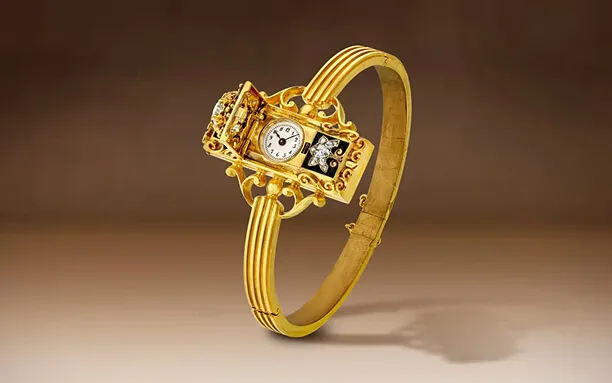
Even so, this piece is pure history; it is the first Swiss wristwatch, an important distinction, as Breguet was based in Paris at the time and very importantly this piece is still in existence and in the collection at the Patek Philippe Museum in Geneva.
What we know about the watch is that it was made for Countess Koscowicz of Hungary and luckily, we can see how it looks.
Sources
Louis Brandt & Frère (Omega) and Audemars Piguet
The first minute repeater wristwatch
Upon activation, a minute repeater complication tells the time by sound, a tiny hammer striking a tiny gong inside the watch, one tone for each hour, a double chime for each quarter of the hour and then another tone for each minute.
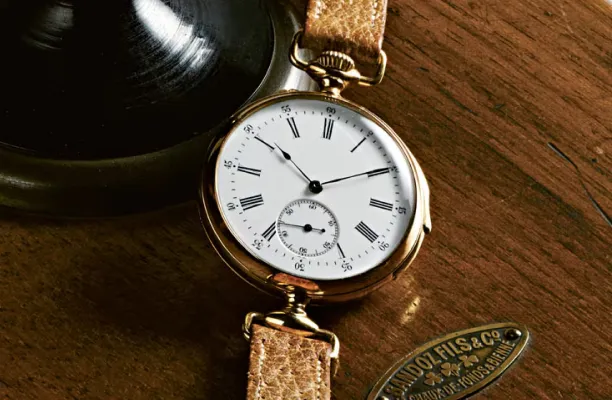
The first brands to put this complication on the wrist were the above-mentioned Omega, at the time with a different brand name and Audemars Piguet who made the movement for the watch.
As described by AP, the watch featured a "case in 18-carat yellow gold, enamel dial, painted Roman numerals, small seconds at 6 o'clock. Case engraved with the inscription Louis Brandt & Frère." The watch was equipped with a 13-ligne calibre (29.3 mm), Movement 2416.
The watch is currently in the Omega Museum and thanks to timewerke.com (and probably someone from the Omega Museum) you can hear a recording of the chiming.
Sources
Cartier Santos-Dumont
The first pilot’s wristwatch and the first men’s wristwatch
As the story goes, Alberto Santos-Dumont was a Brazilian aviator, inventor and contributor to the early development of airplanes.
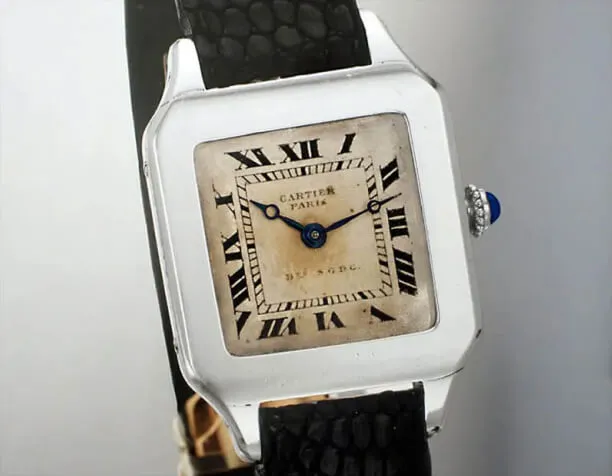
His work around planes led him to complain to his friend Louis Cartier about the difficulty and dangers of checking his pocket watch while trying to pilot his plane. This led to Carier making a watch for the wrist with a leather strap that he gave to Alberto.
As Alberto was discussed in the press at the time, the wristwatch started to gather some fame of its own and in 1911 Cartier started selling the Santos wristwatch to the public.
Up until this point and a few more years to go the wristwatch was an item more popular with women. Only after World War I did the wristwatch really start to become a regular item on men's wrists.
Sources
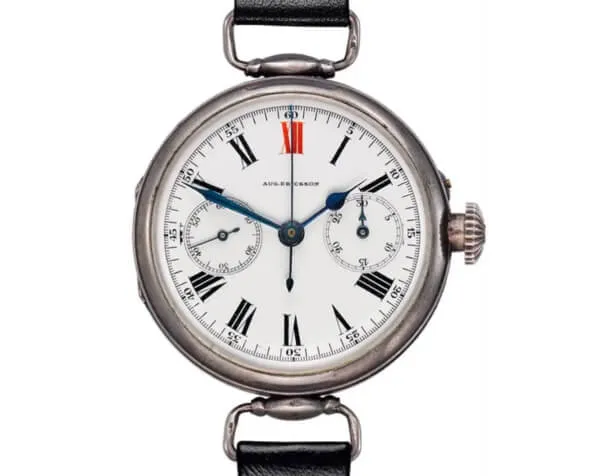
Longines 13.33Z
The first chronograph wristwatch
It is commonly accepted and claimed by Longines that they made the first wristwatch sized chronograph movement, the 13.33Z at 29mm in diameter.
The watch is what is known as a mono pusher style chronograph meaning that you would use a single pusher to start, stop and reset the chronograph.
This also means that you cannot pause timing because once you press the button to stop the chronograph, the next action in line is to reset the timing. Not an issue with later developed chronographs with separate pushers.
There is a charm to this type of chronograph but it's not the most practical approach.
Sources
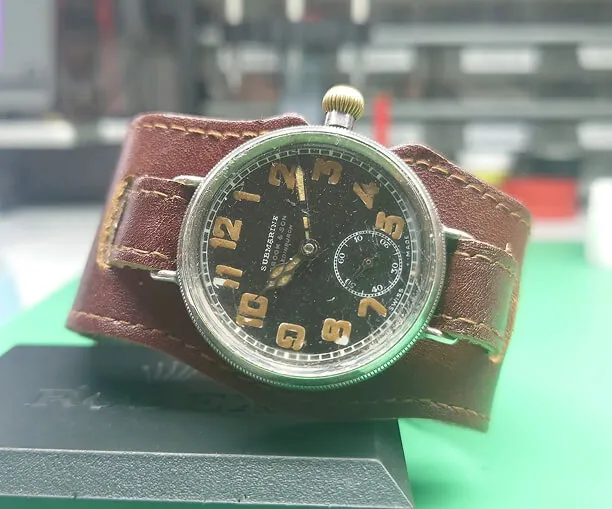
Tavannes Submarine
The first water-tight and first anti-magnetic wristwatch
An article from The Horological Journal, December 1917 describes how two submarine commanders approached a watch company with the request for a watch that is water-tight, non-magnetic and "balance must be of some material which shows a minimum of expansion and contraction with variations in temperature".
The result was the Tavannes Submarine and according to research done by David Boettcher on vintagewatchstraps.com the watch was delivered in 1915 and mentioned in The Scotsman: 6 April 1916 where it is mentioned that the watch was "purchased six months ago".
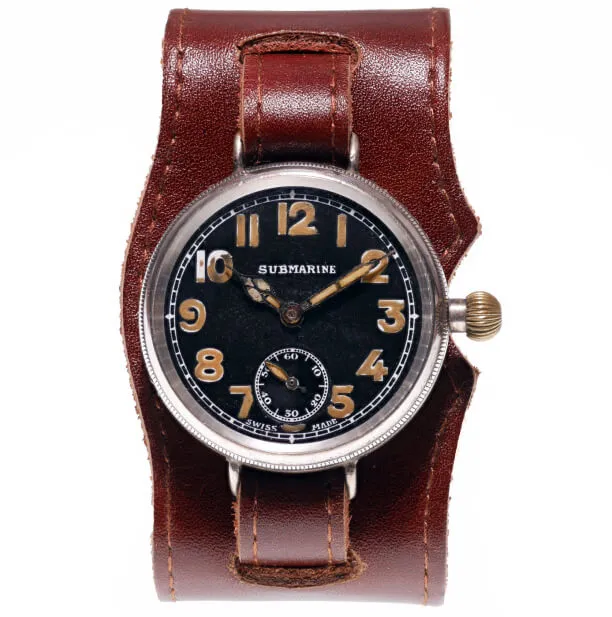
Another point to stress out is that this was also the first documented "anti-magnetic" wristwatch "by the employment of an alloy of iron and nickel".
At least two first are achieved by this watch but are in many cases credited to other wristwatches, usually Rolex Oyster as being the first water resistant watch and the Tissot Antimagnétique for being the first anti-magnetic.
As time goes by, we might find new evidence to prove we were wrong and while those watches have their own merits it's nice to correct the story when we have the chance.
Sources
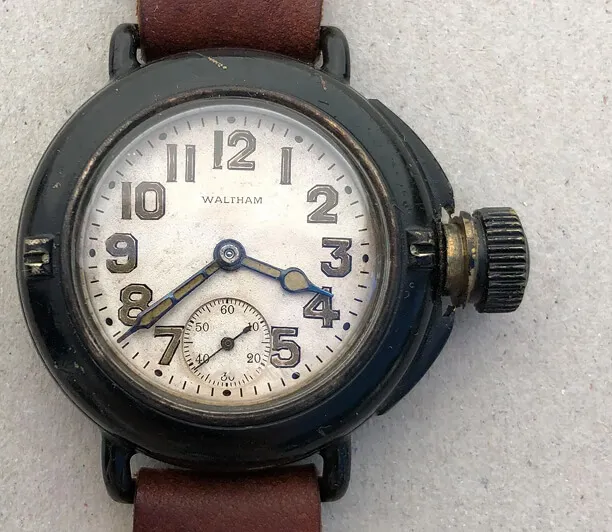
Waltham Field & Marine
The first screw-down crown
This is another "first" waterproof wristwatch, very possibly the better so far. The thing that stands out on this particular design is the screw-down crown that also helps with water resistance. It's the first documented screw-down crown on a wristwatch case as far as we know. Sure, it's not what we now consider a screw-down crown but it functions in much of the same way.
The case was envisioned by American case maker Charles Depollier manufacturing was done by Waltham and featured their movements. The advert claimed this was the only waterproof wristwatch on the market. I doubt that was the case considering the Tavannes from a few years earlier.
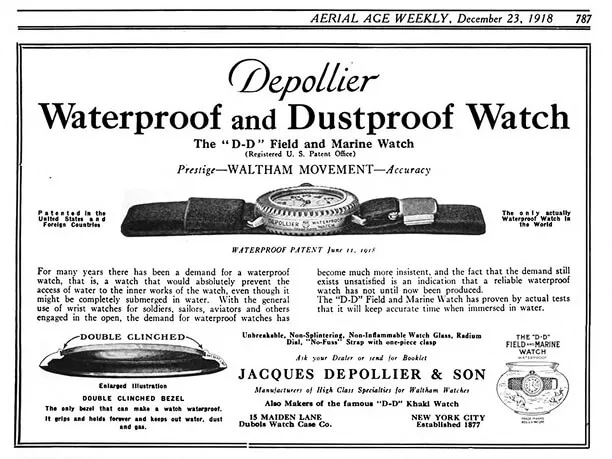
I suspect the issue was that information was quite hard to come by compared to what we are used to these days and this led to many of these types of claims. Probably not intentionally but it's hard to tell.
Evidence is also hard to come by 100+ years after the fact, but they do emerge sometimes and then we can adjust our knowledge.
Maybe this is also the reason Rolex claimed to have the "first" waterproof watch later in 1926. Interestingly, some articles online that mention both the Depollier and the Rolex still credit Rolex for the first screw-down crown. Safe to say, we still don't have a full consensus on the story.
Sources
Longines Zulu Time
The first dual time wristwatch
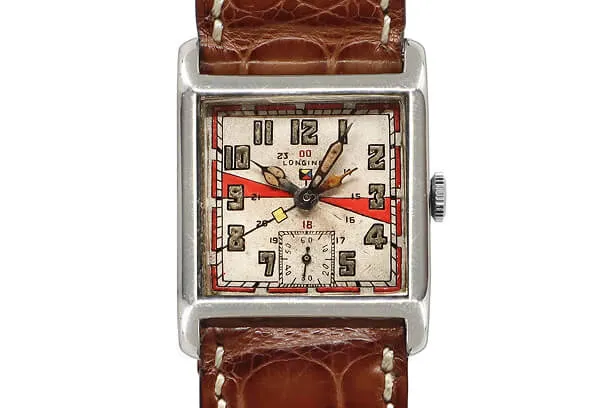
The Zulu Time was introduced in 1925 named after "Zulu Time", the aviation and military term for Coordinated Universal Time, or UTC and it displayed two time zones simultaneously.
Longines was no stranger to this kind of complication as they were the first to introduce the dual-time pocket watch a few years earlier in 1908.
The watch was encased in a 34mm × 24mm square 18K white gold case and was powered by the hand-wound Longines caliber 10.68N.
On the dial there are also some red markings, these are 500 kHz radio silence periods. These are periods of time when radio stations were required to stop transmitting and maritime radio stations were required to observe the frequency for distress signals for 3 minutes every hour.
This is a very short version of the full story as you might imagine but it gives you an idea of what those marking on the watch dial are for.
Sources
Patek Philippe 97975
The first perpetual calendar wristwatch
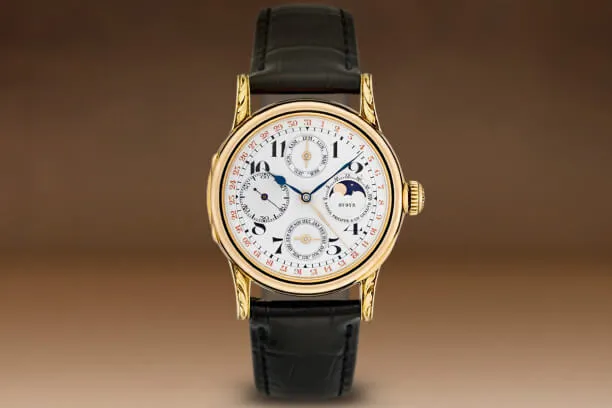
What ended up as a great significant wristwatch in 1925 started life a few years back, in 1898. Patek wanted to create a women's pendant watch equipped with a perpetual calendar for which they created movement No. 97975.
After failing to grab the attention of the market Patek repurposed this movement to create a wristwatch, a 34mm gold case with engraved lugs and mid case.
The watch was, however, not a serial production but a one-off piece sold in 1927 to an American collector, Thomas Emery and eventually found its way into the Patek Museum.
Sources
Harwood and Fortis Self-winding
The first automatic wristwatch
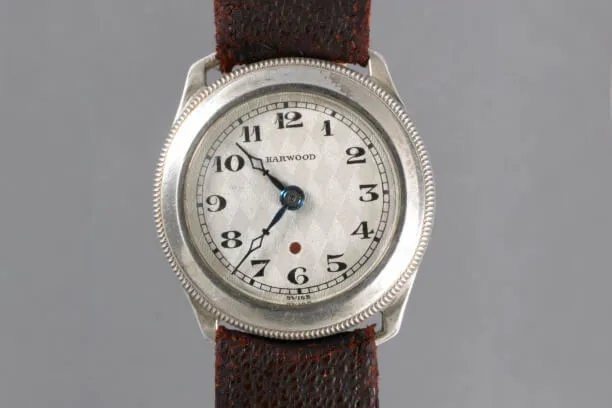
In 1924 a British watchmaker called John Harwood patented a mechanism for a self-winding wristwatch. The watch was later produced by movement maker Anton Schild S.A. and Fortis.
Harwood did set up his own company in 1928 but shut down in 1931, possibly because of the Great Depression.
That mechanism wasn't the usual suspect that we have in most watches today, a 360-degree free spinning rotor. It was instead a pendulum type of mechanism where a weight would go back and forth with a 200-degree movement angle.
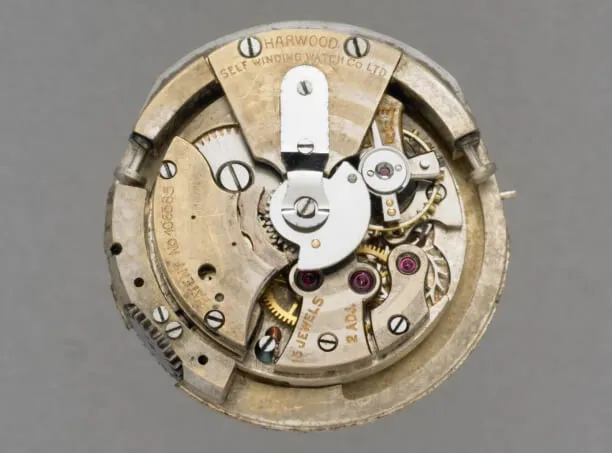
The other interesting bit about this watch is that it didn't have a crown, instead you would set the time by turning the bezel.
Rolex even apologized to John Harwood after wrongly calling their Oyster Perpetual the first self-winding wristwatch. Rolex do have their merits but that is for their entry to discuss.
Back to the Harwood watch, we know there is one in The British Museum and as shown by Tomas Rosputinsky with a bit of patience you can actually buy one just be aware that they are old.
Sources
Plus Four Wristlet Route Indicator
The first...smarwatch ?!
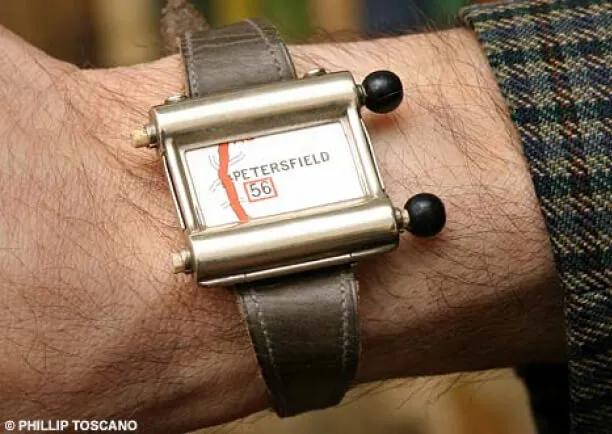
Ok, this is a stretch in all directions, it's not a smartwatch in the modern sense, it's not even a watch to be fair. However, it's a smart dumb device, smart in idea, in a way, but dumb since you have to manually scroll the scroll.
So, what is this? It is a Moving map display that you can attach to your wrist. Inside there is a scroll with a route, as you move along the route you scroll the position on the display.
The device was sold with a core set of 20 scrolls spanning various routes, most of them revolving around London, with more available for order from the manufacturer.
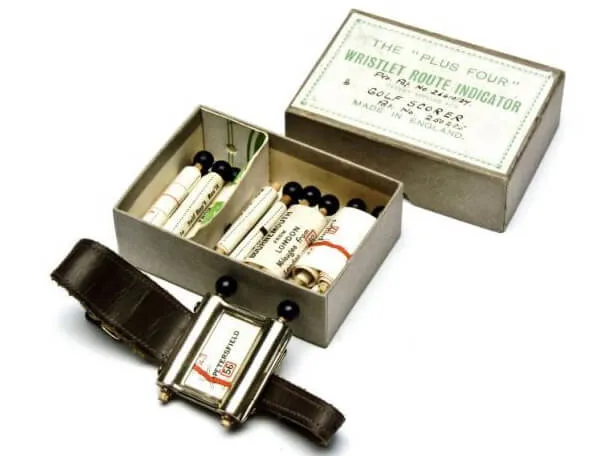
Yeah, I know, it's not a watch...but it's for the wrist, I bet you didn't know about it and it's fun so here it is.
Sources
Longines Lindbergh Hour Angle
The first rotating bezel watch
It's worth mentioning that depending on how you look at things, this wasn't the first rotating bezel in the way we now think about rotating bezels. That tile would go to the previously mentioned Harwood watch that used a rotating bezel to set the time.
In terms of more "conventional" rotating bezels this was indeed the first one as far as we know.
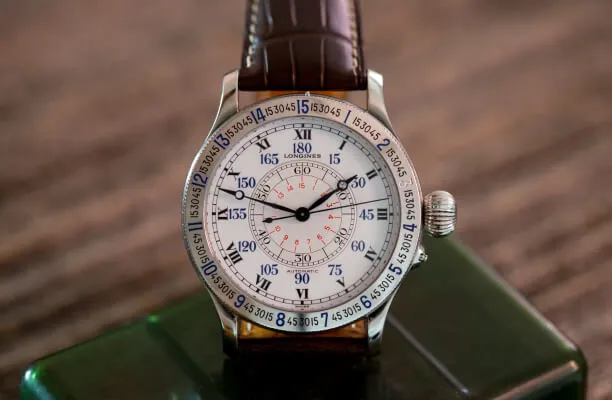
Interestingly the story starts with a very complicated bezel, likely the most complicated one to actually use. It is an hour angle watch with a bezel market with unit of arc.
The idea of the watch was to help pilots navigate by reading off the hour angle of a celestial object at Greenwich and doing positional calculations based on that. The watch also featured an inner rotating disc called a "second setting" that could be set to a time signal over the radio.
I'm not going to pretend I understand how all this works so I will invite you to read the stories from our sources.
Later versions of the watch were simplified to a more familiar 60 minutes bezel.
Sources
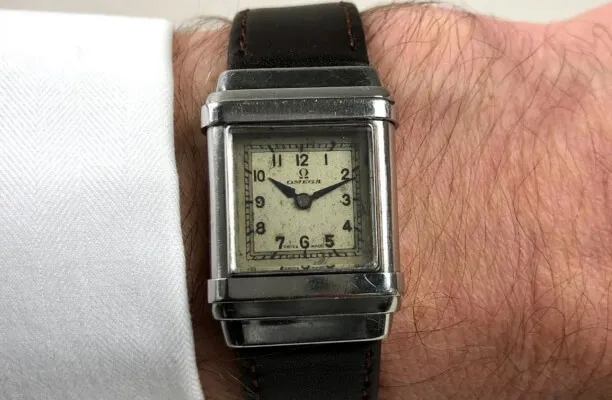
Omega Marine
The first purpose built dive watch
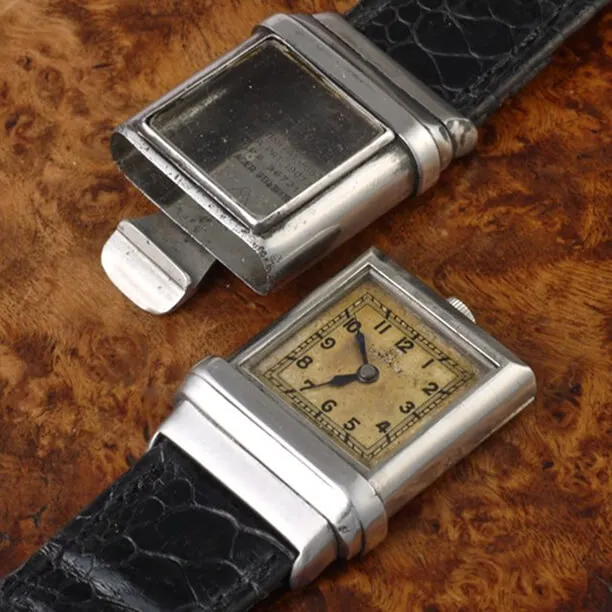
While others created "waterproof" wristwatches before it wasn't until 1932 when the first wristwatch specifically made and tested for diving was created. The watch was the Omega Marine based on a patent by Louis Alix and used an outer case to achieve its water resistance.
The watch was tested at 73m in Lake Geneva and later by the Swiss Laboratory for Horology who found it waterproof to a depth of 135 meters.
Looking at it, it's probably not what you would expect to see based on what we now know as a dive watch, but we’ll soon start to see that concept shaping up.
Sources
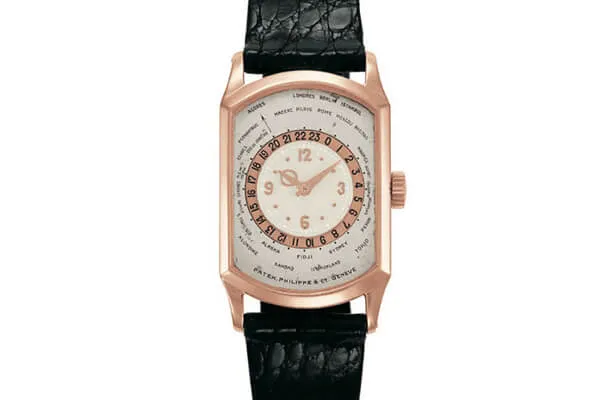
Patek Philippe 515 HU
The first world timer wristwatch
The world, as we know, is divided into time zones, which fix some problems, but we still must figure out what time is in a different time zone and that was no easy thing in the 1930s.
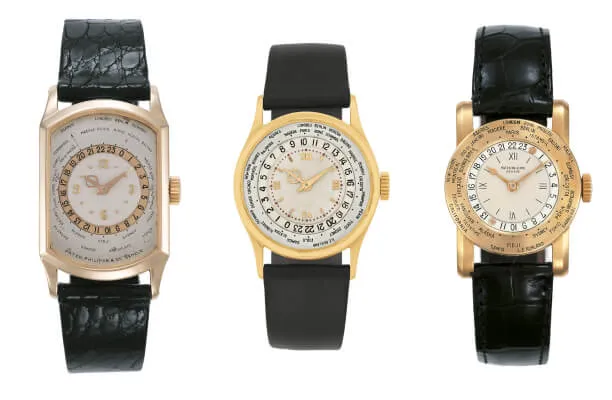
In 1931 independent watchmaker Louis Cottier came up with a solution for watches, the Heures Universelles. That was a watch with an inner ring divided into twelve hours, an outer ring with 24-hour markers, and 31 cities to represent respective time zones.
This first solution was used in a pocket watch for jewelry maker Baszanger but as you would imagine it quickly attracted the attention of major watch makers including Patek Philippe.
Working together they managed to release the first wristwatch with the world time complication in the form of Reference 515 HU in 1937. This was a rectangular case with an Art Deco look to it.
It wasn't perfect, the cities ring was fixed meaning it could only be synchronized to the Greenwich Mean Time but only 4 examples were produced, and they quickly upgraded the concept with their next models.
Sources
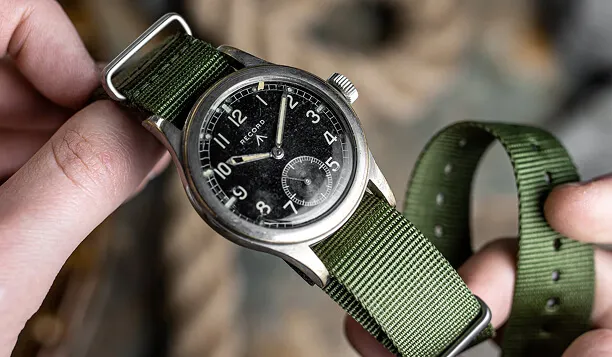
The Dirty Dozen
A WW 2 request
Not a watch specifically but rather a set of watches known as "The Dirty Dozen".
These watches were born out of wartime necessity rather than luxury or style, yet most of these watches probably never saw actual combat use as the war was ending as these watches were being delivered.
During the final years of the Second World War, the British Ministry of Supply (part of the War Office) issued a strict specification for a rugged, highly legible wristwatch that could withstand military use in the field. These watches, designated W.W.W. for "Watch, Wrist, Waterproof", were commissioned from twelve different Swiss manufacturers because no single company could produce enough pieces quickly enough for the war effort.
The brands involved were Buren, Cyma, Eterna, Grana, Jaeger-LeCoultre, Lemania, Longines, IWC, Omega, Record, Timor and Vertex.
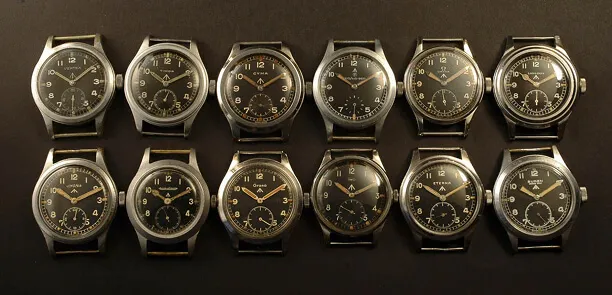
The nickname "Dirty Dozen" was not an official military term at all. It emerged decades later among collectors and enthusiasts, inspired by the 1967 war film The Dirty Dozen. The title suited the watches perfectly: twelve tough, utilitarian machines built for harsh conditions and unified by a common purpose.
Though each manufacturer interpreted the specification slightly differently, the watches shared defining characteristics, black dials, luminous numerals, railroad minute tracks, and reliable hand-wound movements housed in durable steel cases. Their appearance was stripped of ornament, designed entirely around readability and function.
What makes the Dirty Dozen especially fascinating is how they helped define the visual language of the modern field watch. Long after the war ended, their DNA continued to shape military and civilian watch design alike.
Collectors often view the set as the spiritual ancestor of today's military-inspired timepieces, and assembling all twelve originals has become one of the great challenges in vintage watch collecting. Certain models, particularly those produced by Grana, are exceptionally rare due to their low production numbers.
Sources
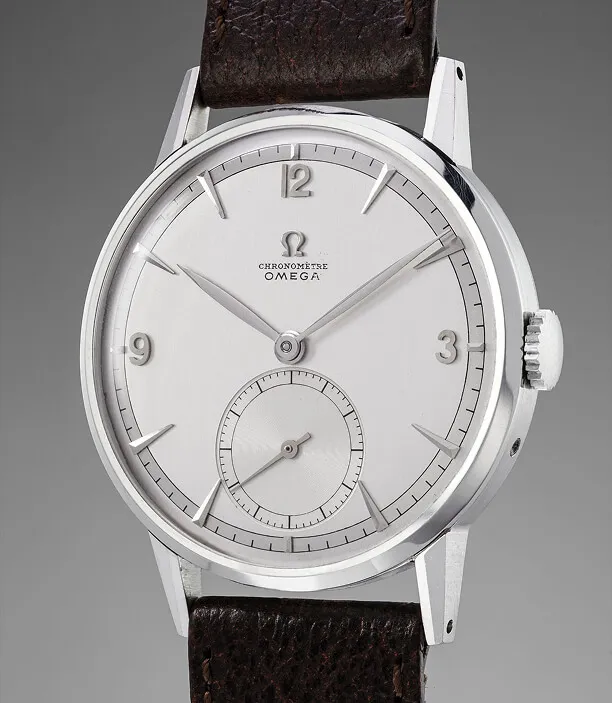
Omega Tourbillon 30 I
The first tourbillon wristwatch
Tourbillion watches weren't particularly popular with either brands or consumers up until the 80s. However, a few brands did build movements with this complication.
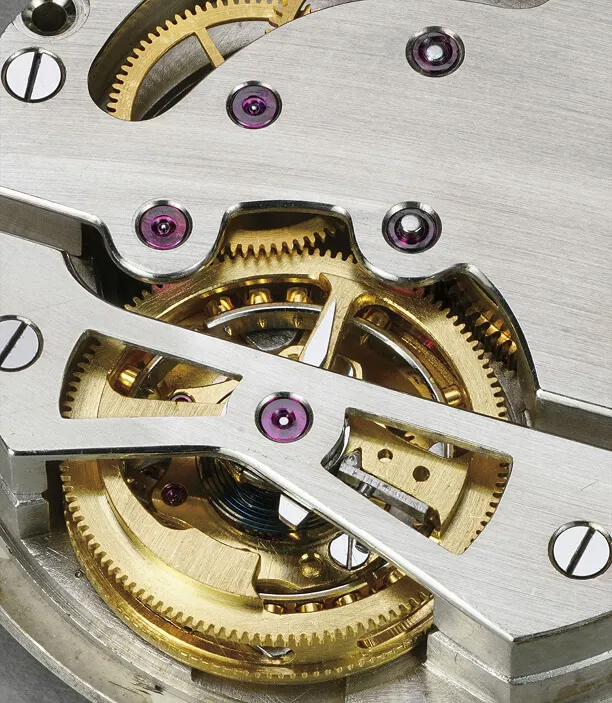
In 2017 an interesting piece showed up in the Phillips Geneva Auction, an Omega watch with the Tourbillon 30 I movement. Neither the watch or the movement were intended for market releases, the movement was made for the "wristwatch" category of the Geneva, Neuchatel and Kew-Teddington Observatory trials, basically for bragging rights.
However, it seems that at some point somebody inside Omega considered releasing a Tourbillion watch to the market and they did build a prototype. This is the watch in question and in auction ended up fetching CHF 1,428,500. Now it can also claim to be the first tourbillion wristwatch with the mention that it wasn’t released on the market.
Sources
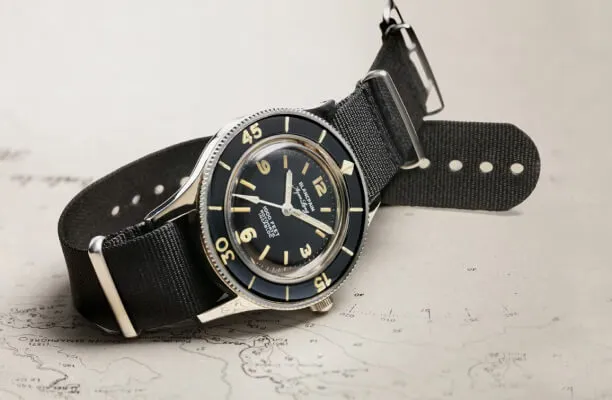
Blancpain Fifty Fathoms
The first unidirectional bezel
Jean-Jacques Fiechter, the CEO of Blancpain at the time had a passion for diving which led him to develop the Fifty Fathoms mostly guided by his own needs.
According to the official story that list of needs included a double sealed crown but not the screw down type, a rotating bezel with a locking mechanism that required the bezel to be pushed in order to rotate, a different type of screw-on case back from what was done at the time, a large size for visibility under water and a few others.
I think this is the only time we see the locking bezel being mentioned and there is no mention of the unidirectional bezel. There is however an ad on BBC that does mention it. Otherwise, every piece of media mentions this but it's unclear what the original source is.
The same year Rolex was working on the Submariner but was presented to the world at the Basel Watch Fair in 1954. Debates continue as to who was the most influential brand in the development of what we currently recognize as a standard dive style watch.
Sources
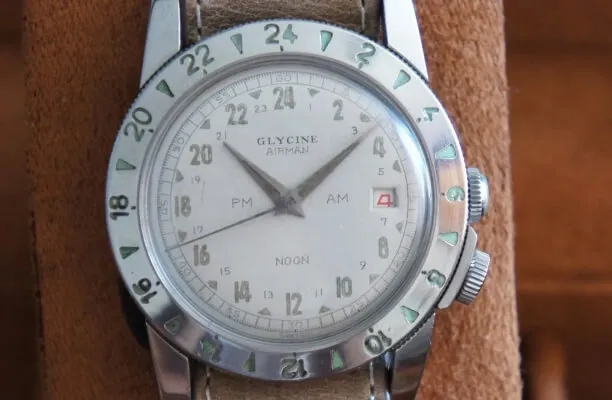
Glycine Airman
The first GMT wristwatch
According to Glycine it was a request from Chat Brown, a British pilot and commander for a time piece that would help pilots keep track of time as they flew across time zones. We take it for granted these days but in the 50s it wasn't so easy coordinating local time to the airport you were landing on and so on.
Glycine created the aptly name "Airman" with a very elegant solution, a 24-hour dial with pared with a 24-hour locking bezel. With it you can track 2 separate time zones with AM/PM differences and because the time is shown only in 24-hour markers it's also very easy to read.
The watch was very successful amongst pilots at least and is a line of watches that is made to this day.
Sources
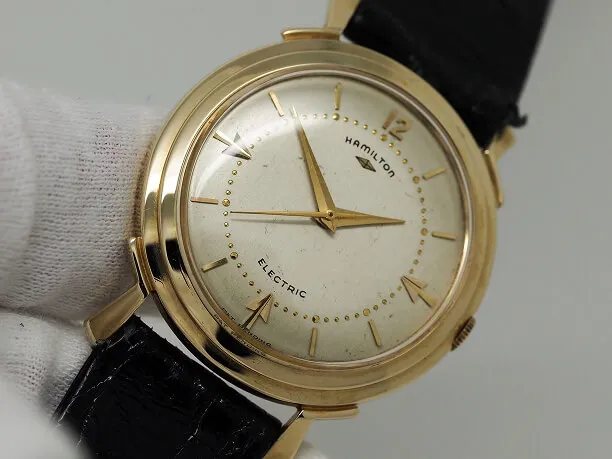
Hamilton 500
The first electric wristwatch
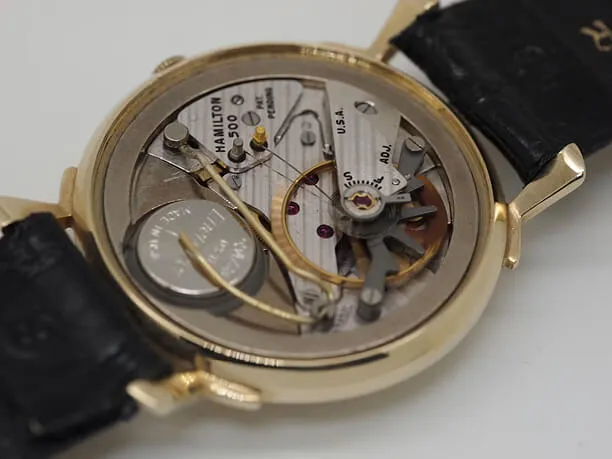
This is a battery powered mechanical watch, a strange notion but the reason why we call it electric and not electronic.
The big difference from a regular mechanical movement comes from replacing the usual mainspring with a battery and a special kind of balance that is moved by current from the battery.
The project was in the works since 1947 but being first at anything includes significant challenges including the battery itself, magnetism inside the movement and general reliability.
It was introduced to world 1957, still with reliability issues and lived in various forms up until 1969. The same year Seiko introduced the Astron, the first quartz watch making this electro-mechanical approach obsolete.
Sources
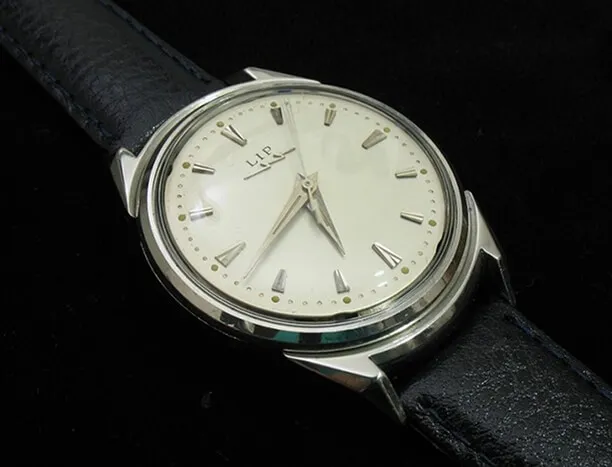
LIP Electronic
The first electronic wristwatch
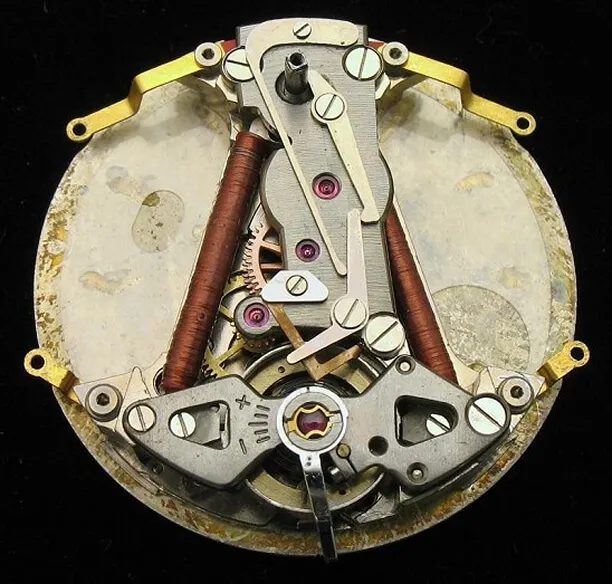
In the 50s a few watch companies were experimenting with electric wristwatches. Among them was Frech watchmaker Lip. In 1958, one year after Hamilton, they made the Electronic with the R27 caliber.
Technically this was the first ever electronic wristwatch as it used a tiny diode to reduce sparking on the contacts but otherwise was a "regular" electric watch.
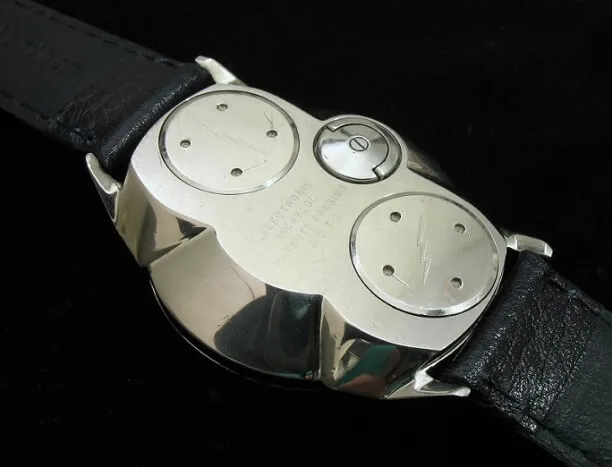
The watch required two batteries which made it quite bulky. Approximately 7000 units were made.
They would go on to release more electric/electronic models and also sell movements to other brands like Stowa, Vulcain and Waltham and they are still on the market today.
Sources
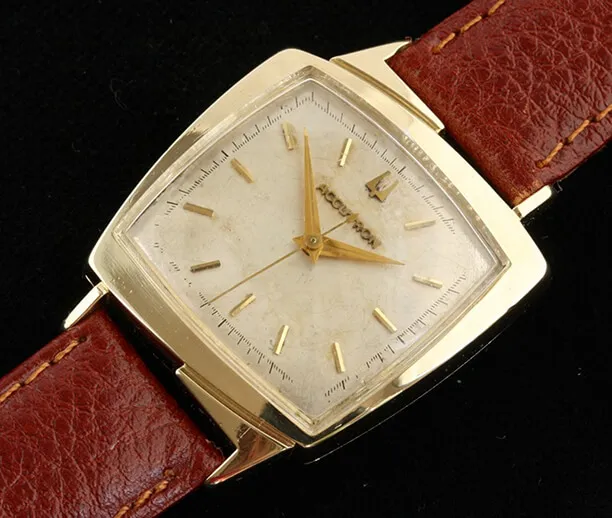
Bulova Accutron
The tuning fork era
Electric watches were the hot stuff in the 50s. Not quartz yet but rather a weird mechanical hybrid powered by battery. They were unreliable and not more accurate than the regular mechanical.
Enter Max Hetzel, who saw the issue and came up with the tuning fork. The tuning fork would replace the balance wheel that was still present in electric watches up until this point.
If you can image the usual balance wheel going back and forth and translating that movement into a gear of the movement then the tuning fork would in practice do the same but at crazy speed. Check out this video, it's cool to see the fork in action and to understand how it works.
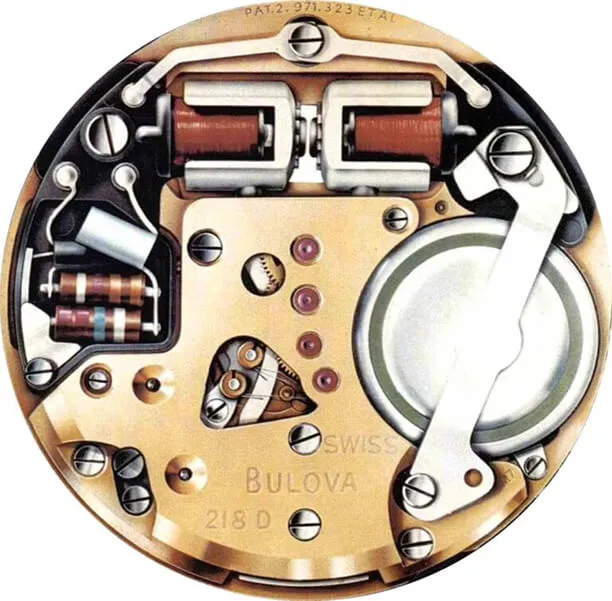
It took a while to develop, from the first prototype in 1954 to the market release in 1961 but it was a hit with 100,000 sales by 1963 and over 350,000 sales by 1965.
In a sense it was short-lived due to the appearance of the quartz-based wristwatches, but you can still get it in the Accutron Spaceview series.
And as for the reasons quartz won, in short, better accuracy, lower power consumption, increased durability, and lower production costs. Fun fact, the quartz crystal is also in the shape of a tuning fork.
Sources
Pobeda 34-K
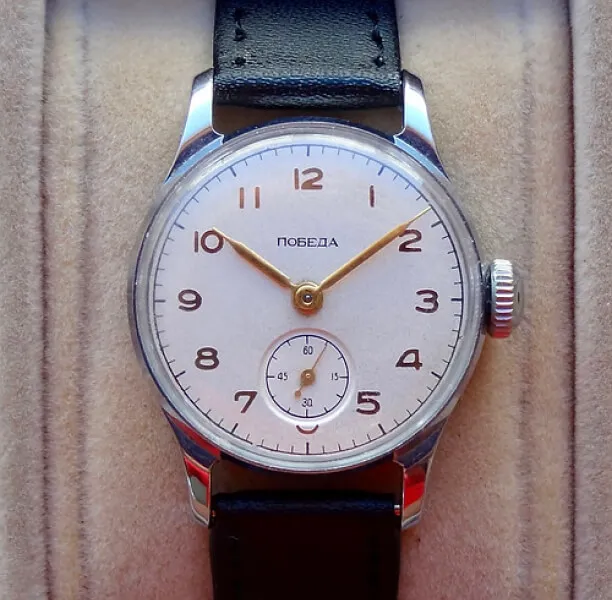
The first wristwatch in space
This is a less talked about watch and often the first watch in space "award" goes to Yuri Gagarin's watch, a Sturmanskie.
However, there was a watch that went into space a month prior. On March 9th, 1961, a mission was launched into space to test survivability prior to putting a human there. The crew consisted of a human mannequin Ivan Ivanovich, a dog named Chernushka, some mice and the first guinea pig in space.
Part of the team that was involved with the launch was Soviet aerospace medical researcher Dr. Abraham Genin. Without being planned and without any sort of authorization Genin strapped his own watch to the dog.
The mission was a success and lasted 1 hour, 41 minutes.
Unfortunately, this is not a widespread story but there is an interview with Dr Genin in the Smithsonian archives.
Sources
Doxa 300 T Conquistador
The first helium release valve
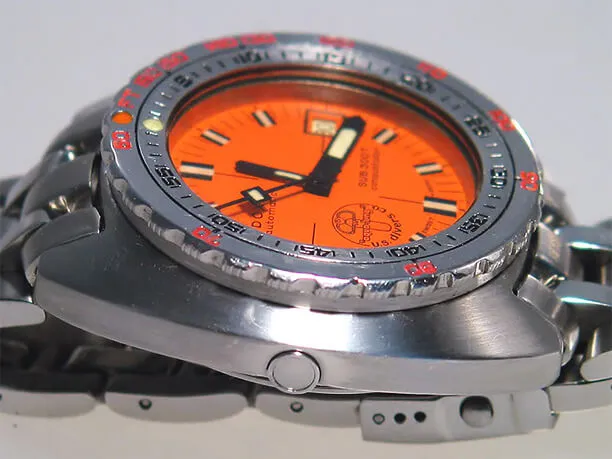
It's a fact that Rolex has the first patent for a Helium Release Valve but there is evidence that in November 1967 Doxa was testing the Sub 300 'Conquistador' with a valve, months before Rolex started testing their Sea-Dweller prototypes.
The Sub 300 was launched onto the market at Basel Watch Fair in 1968 while Rolex was in early testing with their version but then vanished from the market. What happened?
Jose Pereztroika suggests that "the most plausible explanation is that Rolex claimed their right to the idea and forced Doxa to withdraw the Sub 300 'Conquistador' from the market".
Maybe Doxa waited to have a working prototype before filing for a patent while Rolex did so without a prototype, who knows. Goes to show that an idea might be worth a patent even before you know it actually works.
Of course, this is just a summary of the story, and the devil is in the details as they say, maybe there is a case of corporate espionage in here somewhere or just gossip between people connected to the brands.
Interesting also, if you read the full story, the Rolex valve was quite rudimentary compared to the Doxa one so maybe just whispers of what Doxa was doing reached Rolex who immediately patented something to have the title of "first".
Keeping in mind that "firsts" seem to have been in the Rolex marketing modus operandi it's safe to assume they would jump on each and every opportunity to claim another one. This time it worked for real.
Sources
Seiko Speed-Timer
The first automatic chronograph
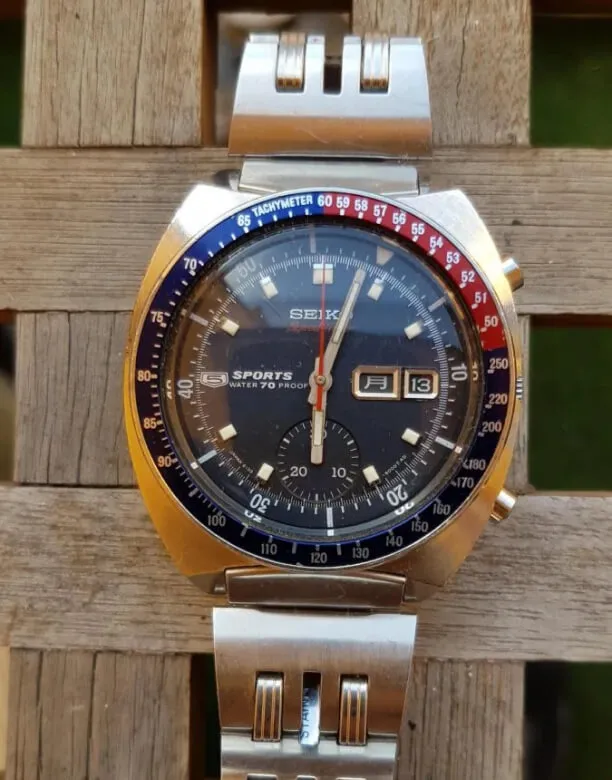
69 was THE year for automatic chronographs with the Swiss battling to be the first to have this tech. Zenith was at it alone. On the other side there was Breitling, Heuer, Buren and Dubois-Depraz working together. But there was also another player at the party in a corner where nobody noticed.
By this time chronographs were not uncommon, automatic watches were also not uncommon, but an automatic chronograph would certainly boost one's image and sales. The race was on.
On January 10, 1969, Zenith unveiled to the press their integrated high-beat automatic chronograph, dubbed "El Primero". Jack Heuer spilled his coffee. On March 3, 1969, Breitling, Heuer, and Hamilton-Büren held press conferences around the world announcing their self-winding chronograph. Zenith was probably sweating but still at it.
However, in April at Basel Fair, Mr. Hattori of Seiko congratulated Heuer on their achievements only for him and the rest of the industry to realize that Seiko already had an automatic chronograph on the market.
Nevertheless, Breitling, Heuer and the rest of the gang managed to deliver their first watches to market soon after the event with Zenith lagging behind and delivering the El Primero in October of that year.
Sources
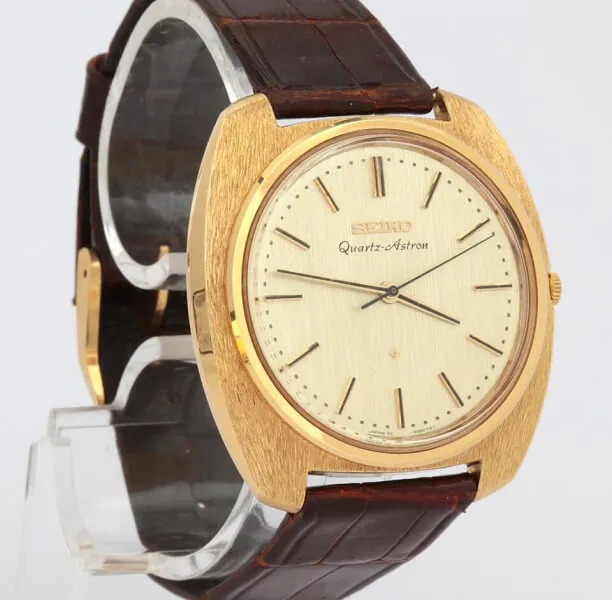
Seiko Astron 35SQ
The first quartz wristwatch
Like with many firsts in terms of wristwatches, the base technology or idea came first in pocket watches or even large clocks. In this case it was from the quartz clock that was invented by Joseph W. Horton and Warren A. Marrison at Bell Telephone Laboratories.
Seiko was also no stranger to quartz, in 1959 they developed a clock for use in broadcasting stations but, as Seiko describe it, it was about the size of a large locker.
In 1960 Seiko was appointed as official timekeeper of the 1964 Tokyo Olympics so they developed a tabletop quartz clock which in turn led to the Crystal Chronometer that was used as the primary clock of the Tokyo Olympics.
From these devices Seiko continued to develop prototypes of a pocket watch and then a wristwatch in pursuit of miniaturizing the quartz movement. Eventually this led to the 1969 release of the first quartz wristwatch with an accuracy ±5 seconds per month, an incredible feat at the time. The price was 450,000 yen, "around the same price as some of the popular cars of the time".
The Astron was equipped with a quartz oscillator with a vibration frequency of 8,192 Hz. Later quartz timepieces would standardize a frequency of 32,768 Hz.
Sources
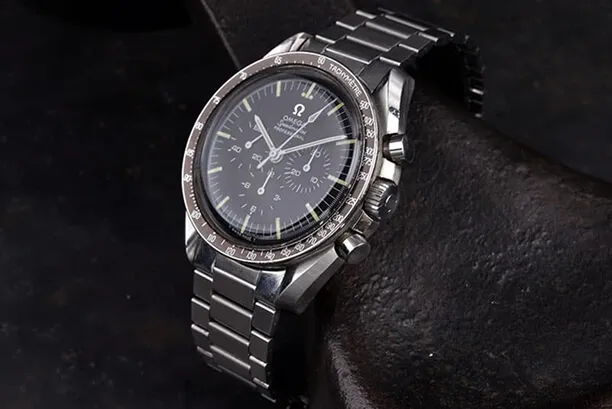
Omega Speedmaster Professional
The first wristwatch on the moon
I think there is little that hasn't been said about the historic Apollo 11 mission, the first people on the moon and about their watches. Up to this point many wristwatches have been worn into space, from brands like Omega, Pobeda, Moscow Watch Factory, Heuer, Breitling, Accutron, Strela, Rolex and possibly others.
For the moon mission, NASA put out a list of requirements for the watch and put out a call for 10 companies to send their best. Only 4 responded and after NASA did their testing, only one qualified. It was the 4th generation of the Speedmaster Professional.
Neil Armstrong and Edwin "Buzz" Aldrin Jr. who descended on the moon had the 105.012-65 reference while Michael Collins who remained in lunar orbit had a 145.012-68 reference. The differences between the models are minor with the main changes being around the pushers.
So, if you want your own actual moonwatch model you are hunting for a 105.012-65.
Sources
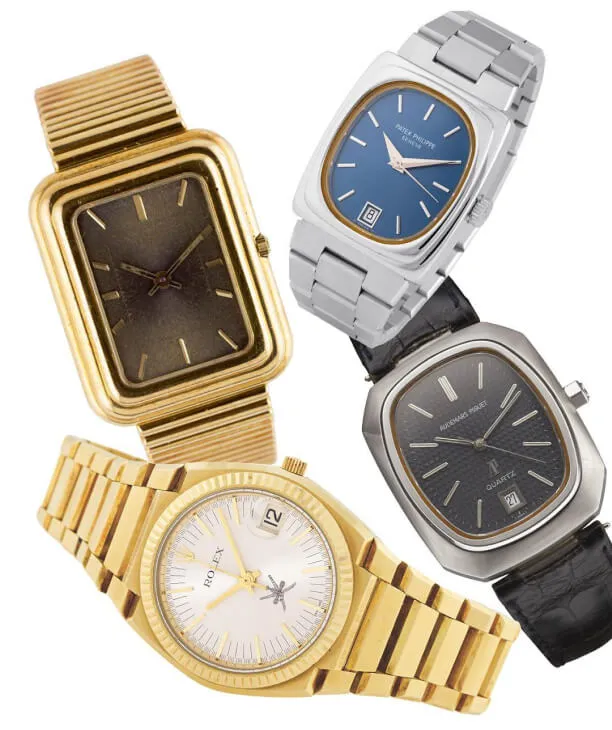
CEH Beta 21
The first Swiss quartz movement
This is not the story of one wristwatch but rather the story of a movement and a bunch of watches from many brands that were introduced to the world at same time.
In 1962 20 Swiss brands banded together to form the Centre Electronique Horloger (CEH) with the purpose of making an electronic wristwatch movement. This was in response to the rise of battery powered watches (not quartz specifically) that would threaten to leave the Swiss industry behind.
After a few attempts that led nowhere the CEH eventually developed a quartz movement and the first quartz wristwatch in 1967, but it never went to market. The next step was the Beta 21 movement that was introduced to the world at the Basel Fair in 1970.
The movement had a production run of 6,000 units and was used by many well-known companies, including Bulova, IWC, Omega, Patek Philippe, Piaget, Rado, and Rolex.
It was, however, quickly surpassed technically and never produced afterwards.
Sources
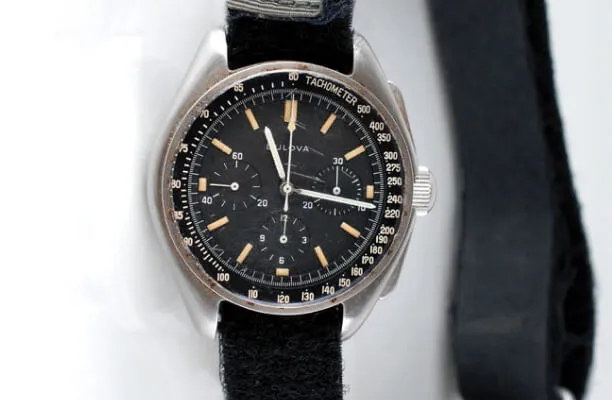
Bulova Lunar Pilot
The other moon watch
There is still some mystery surrounding this watch, but we do know this watch was worn on the moon in the Apollo 15 mission.
David R. Scott was issued a standard Omega Speedmaster as a mission watch but the crystal on it popped off. Luckly he was gifted with a Bulova watch by the brand that he took with him on the mission, so he wore that.
From what we know, the watch was made by Universal Geneve which was owned by Bulova since 1967 and was one of 16 made. The watches were possibly powered by a Valjoux 72 according to research done by Hung Doan.
In 2015 the watch showed up on an auction and sold for $1,592,500. To capitalize on the buzz surrounding it Bulova released the reissue that we know today but with a high-frequency quartz movement instead of a mechanical one.
Sources
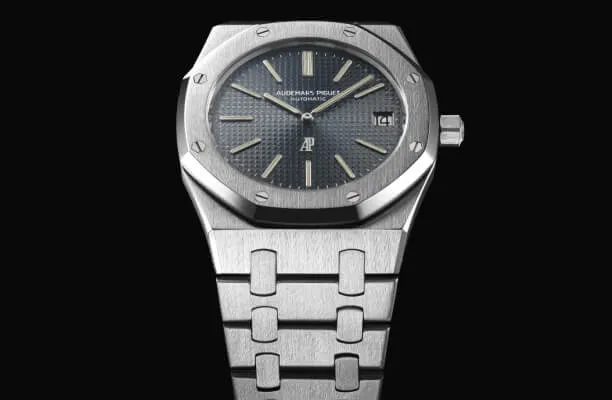
Audemars Piguet Royal Oak
The birth of a new genre
In 1970, AP was still a relatively small company with 84 employees and a production of 5,500 watches per year, and they were looking to expand in terms of distribution and production.
The solution was to partner with Société Suisse pour l'Industrie Horlogère a group of Swiss watchmakers with 7,000 people and 20 brands with a combined production of 4.6 million watches.
This group asked AP for "stainless steel wristwatch more in tune with the way we live today. We had to invent a model both sporty and stylish in spirit, suitable for evening wear and for the daily activities of today's man of taste". Another requirement was that the watches be produced in sufficient quantities to supply their most prestigious outlets.
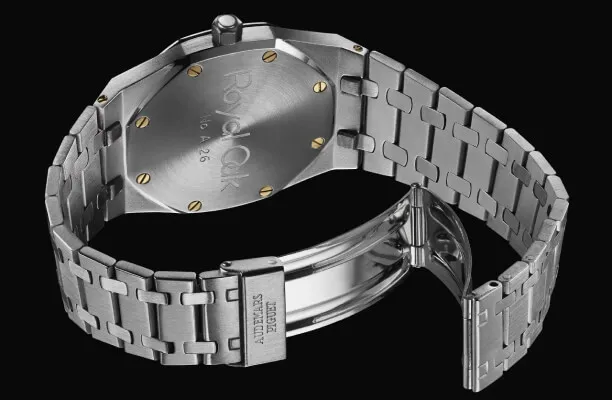
Georges Golay, the CEO turned to Gérald Genta, a designer with whom AP worked before starting in the 1950s on models such as the 5179, the asymmetrical 5182 and the 5199.
The resulting watch was launched in 1972, an odd duck in the market, stainless steel, octagonal bezel, exposed screws, integrated bracelet and to top it all off 3,300 Swiss francs which was a lot.
However, even though it took some time to catch on we know how things went down and how the other brands rushed to get their own piece of the stainless steel, integrated sports watch pie in the following years.
Sources
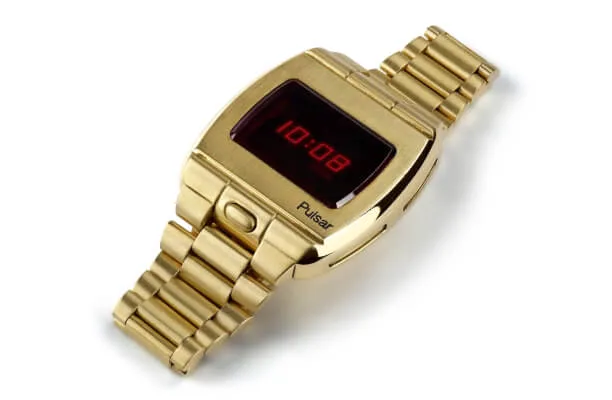
Hamilton Pulsar P1
The first digital wristwatch
After the success of the first electric wristwatch in previous years Hamilton had its sight on the next big innovation in the industry, the electronic digital display.
The watch was going to be a solid-state wrist computer with an LED display, developed in collaboration with Electro/Data Inc.
To save battery the display would only show the time for 1.25 seconds when a button was pressed but holding the button for longer revealed the passing seconds. To set time you would use a magnetic bar hidden in the bracelet.
It was presented in an 18 ct yellow gold with a price tag of $2,100 (about $16,417.43 in 2026). A year later the P2 with a stainless-steel case was introduced, presumably more affordable and produced in larger quantities.
The watch was a big success with big names like Jack Nicholson, Joe Frazier, Elton John and Keith Richards buying it and in 1973 the P2 was featured in the James Bond movie "Live and Let Die".
Sources
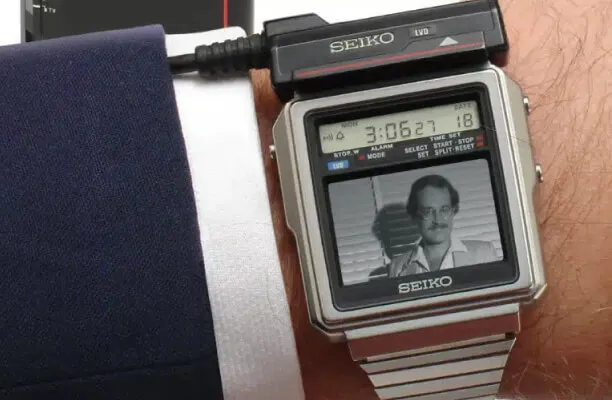
Seiko TV
The TV wristwatch
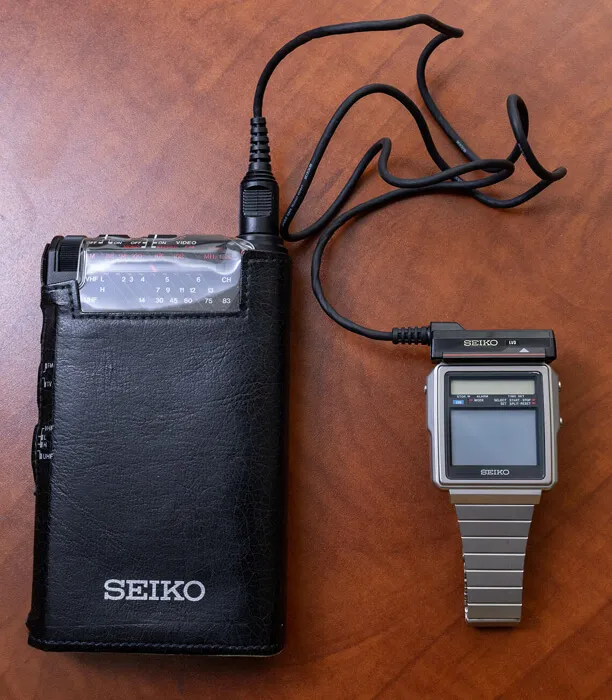
One piece of forgotten wristwatch history is the TV wristwatch, developed by Seiko. In the 1980s the price of quartz was pretty low compared to its early days, so companies were looking at figuring out the next big thing.
Companies in Japan were masters at electronics and miniaturizing things, so they cooked up the idea of fitting a TV on your wrist.
However, the watch needed some extra accessories to work as a TV. It came with an external signal receiver that you had to connect to the watch, that would handle the TV magic, and the watch would just display the image. It also had a pair of headphones for sound.
Of course now we have smartwatches if we are interested in such ideas and we don't need extra receivers but for the 1980s this was pretty epic if you think about it.
Sources
Swatch
The watches that saved an industry
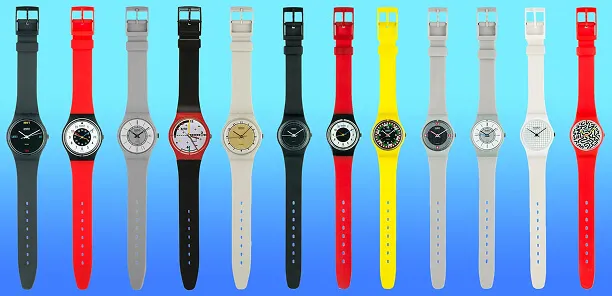
1983 marks the beginning of an interesting story regarding the Swiss watch industry. The famous "quartz crisis" was in full swing, Seiko and other quartz forward watch brands gained so much popularity that the Swiss industry was going down fast. They were hard to adapt even though they made some steps in that direction.
Swatch took a different approach to watches, they came up with the idea of a "second watch", hence the name Swatch. Fashionable, trendy, colorful and very importantly, cheap.
At the time of release the Swatch watches where priced between 39.90 and 49.90 Swiss francs, which translated to about 83.79 to 104.79 USD. For a quick comparison, a Rolex Submariner in 1986 was about 1325 USD.
The brand celebrated producing its 100 millionth watch in 1992, not even 10 years after introducing the first one. You could conclude that the strategy worked. It worked so well that Swatch ended up buying a lot of the traditional watch brands as they were crumbling.
Some of these brands include Omega, Blancpain, Breguet, Glashutte Oringinal and a few others.
If you want to learn more about the Swatch market "takeover" and their continuous pursuit of innovation, check out a great article on Fratello.
Sources
Audemars Piguet 2870
The first tourbillon wristwatch to market and the first automatic tourbillon
In 1986 while the "quartz crisis" was in full swing some of the Swiss companies went out of business others went even more upmarket to capture the luxury space.
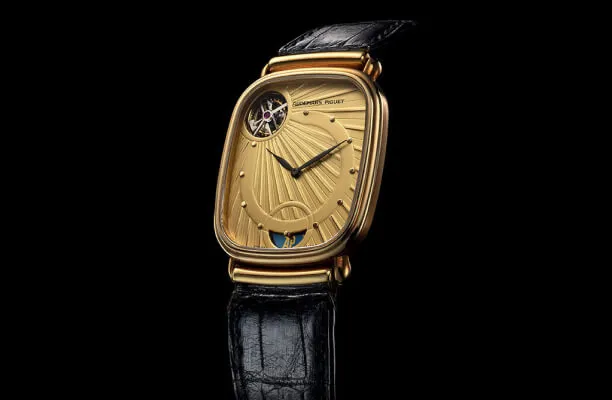
Possibly as part of this ideology Audemars Piguet took a bit of a crazy turn towards a complication nobody was asking for and nobody else believed in since the 30s and 40s when it was first attempted in a wristwatch.
They released the self-winding tourbillon calibre 2870. A watch that featured a front facing tourbillion and a dial cutout that allows you to see it in action every time you check the time or just stare at it.
The watch was a big achievement, not only was it the first series production tourbillion wristwatch but also the first automatic one and on top of that it was 4.8 mm tall.
Apparently, it wasn't a commercial success, but it paved the way for one of the most alluring compilations in wristwatches. Unfortunately, one that most people can’t afford, unless you look at the Asian markets, or course.
Sources
Casio F-91W
The most wristwatch in history
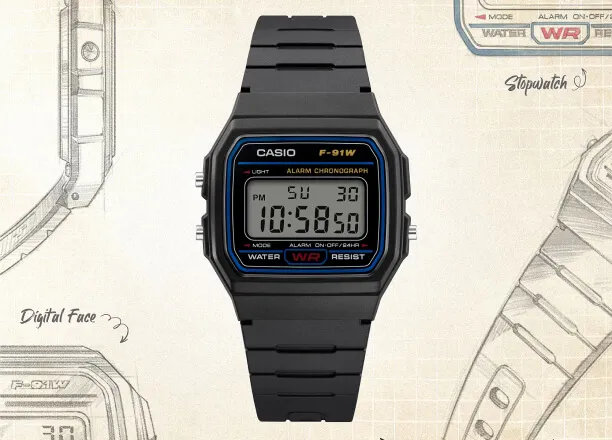
The designation here is not a typo, it's probably the most appropriate way to describe it.
Some would say it's the most sold watch in history with the media repeating a figure of 100 million units sold. The Apple watch has beaten that with reported figure of over 280 million units sold.
Maybe the most sold non-smartwatch watch, but even then, we don’t have a source for that estimate except blogs referencing other blogs.
Maybe the longest watch in production considering that is still produced currently but that wouldn't do it justice.
This affordable little watch is worn by everybody from presidents to terrorists and in some countries has the power of making the wearer suspect of terrorism. Think of any other watch that can be described that way.
How did it get here?
It's a short presentation so we won't go into details, but the watch offers a unique mix of price, features, accessibility and reliability. People all over the world enjoy that and in terms of needs, it's literally all the watch you would need even if not all the watch you would want.
Sources
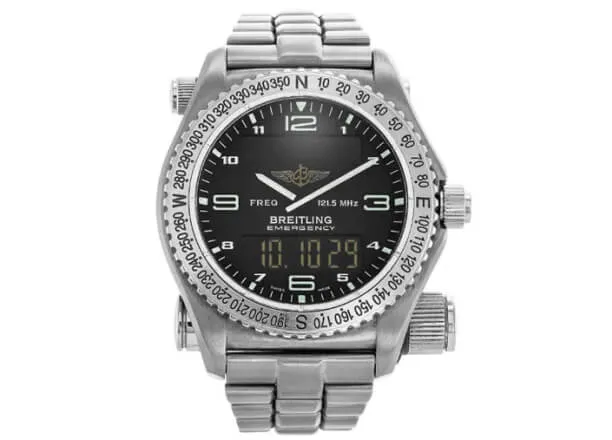
Breitling Emergency
The watch that can save your life
The Emergency is a special watch that contains an emergency beacon, a device that when activated transmits signals on the international distress frequency of 121.5MHz. The signal could be picked up from up to 167km away and allowed authorities to precisely locate the source of the signal and rescue the wearer.
Initially it was only sold to licensed pilots but was eventually sold to the general public upon signing a document where the buyer acknowledges that the responsibility of paying for a rescue mission triggered by a false alarm falls on their shoulders.
Also, if the transmitter was used in real emergency, Breitling offered to replace the watch for free since the beacon system is single use.
Today there is newer model on offer with better and more modern functionality in the beacon, but the core idea remains. Unfortunate that it is a really large watch at 51 mm diameter and 65.5 mm lug to lug but for what is inside it's not "that" large. The original one was only 43mm by 50mm.
PSA: As far as I understand the frequency used by the first-generation watch is no longer active so, don’t rely on it for safety.
Sources
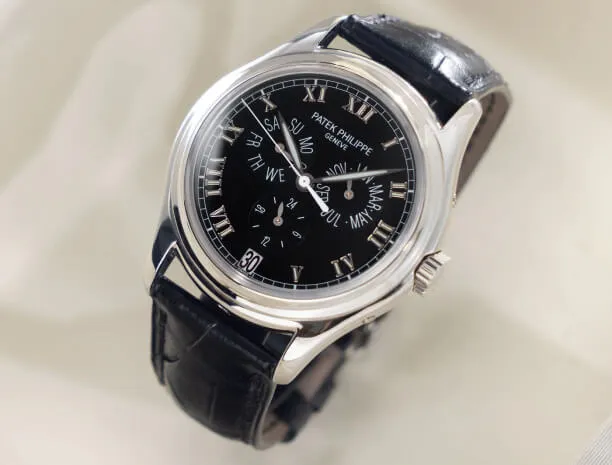
Patek Philippe 5035
The first annual calendar wristwatch - 71 years late
The first perpetual calendar wristwatch was introduced by Patek Phillipe in 1925. So how come it took 71 years to arrive at what seems to be a simplified version? Also, how and why does this simplified version have more components rather than less?
Long story short, for the longest time there was no need for "just" an annual calendar since the perpetual calendar existed. It knew how to advance the date properly, taking February into account and it knew how to deal with leap years.
The big catch here is that they were expensive. Not only that but for Patek there was a big gap between their entry point watch and their perpetual calendar, a jump from 9,350 USD to 45,000 USD. Philippe Stern, the president of Paket also wanted to develop "useful complications" to fill in that gap.
The result is the watch we're looking at here, and the reason the parts count increased is because the movement was more or less made from scratch. Instead of using the complex and expensive to make parts of the perpetual like jumper springs and cams they moved to simpler parts, wheels and pinions but as a result they needed more of them.
From all of this they made a calendar watch that knew how to self-adjust the date in months with 30 and 31 days and left the user to adjust the date at the end of February. The watch was launched with a price tag of 17,500 USD.
Sources
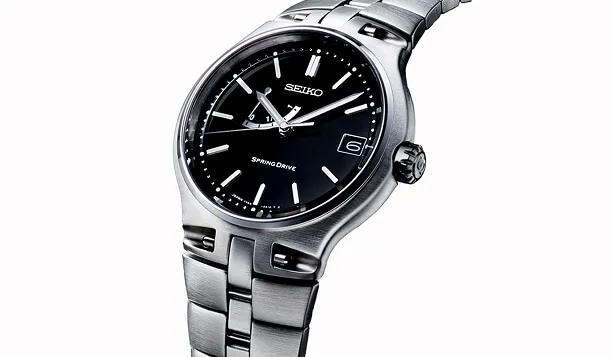
Seiko Spring Drive
A merging of two worlds
Mechanical watches are great but as we all know they are not super accurate, at least compared to quartz movements. But what if you used the accuracy of quartz to regulate a mechanical movement?
That is exactly what Spring Drive is, a merging of two worlds, a mechanical movement that replaces the usual escapement with a magnetic brake, regulated by a quartz crystal. To top it all off, it doesn't even need a battery.
This magnetic escapement is designed in such a way that when the wheels are turning in the movement, a portion of that mechanical energy is turned into electric energy and powers the quartz crystal. The crystal in turn applies a softer or harsher brake on the movement to keep it from going too fast or too slow.
Sources
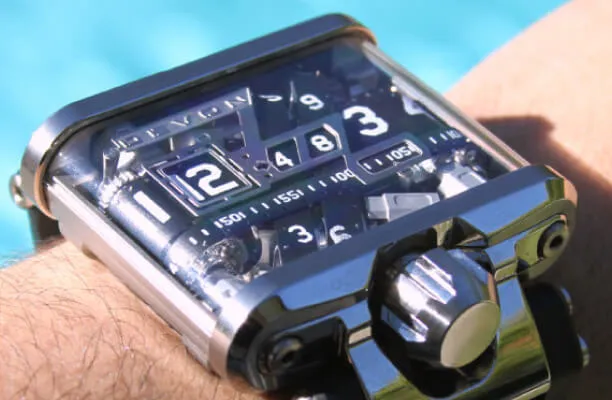
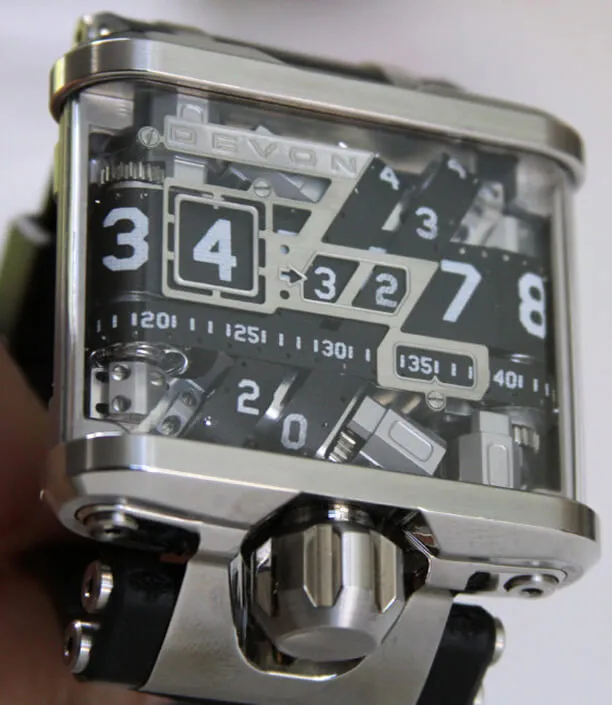
Devon Tread 1
Using belts to tell the time
If you are bored of the usual hands telling the time on your watch this is one possible solution. This watch tells the time with a series of belts moved by micro motors powered by a battery that would last about two weeks and features wireless charging.
The watch case is 53.3mm wide, 47mm tall and 19mm thick so you need to have quite a large wrist to pull this off but at least it's been reported to be comfortable.
Sources
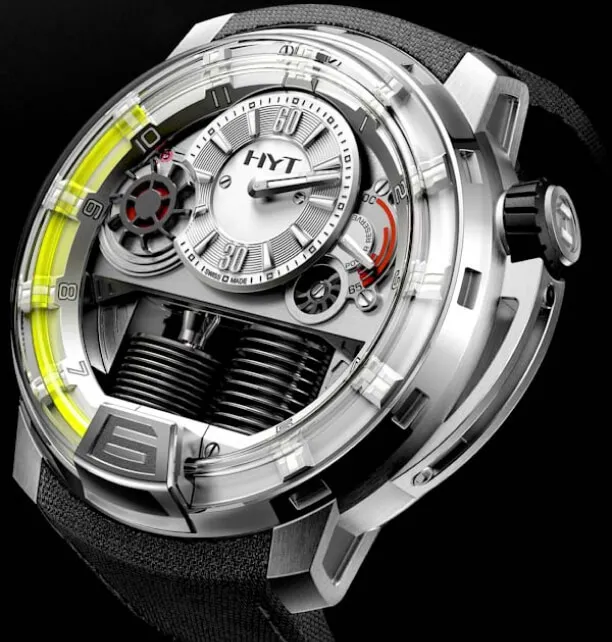
HYT H1
Using fluids to tell the time
What do you do when you like watches, but the concept of watch hands seems too dated, old fashioned. You use liquid to tell the time, of course.
Well, the hands are not completely replaced, just hour hand. Enough to make it look a bit alien.
To make this work the watch uses a system of two bellows that contain liquid, one colored and one transparent. As time advances so does the colored liquid inside a tube that goes round the watch face indicating the hour.
Size wise this piece of tech is 48.8mm wide and a pretty massive 17.9mm thick and at the time of launch was priced at $45,000.
Over the years there have been a few other models, and they managed to shrink them just a bit to 45.30 mm diameter with 17.2mm thick on the T1 Titanium model.
Sources
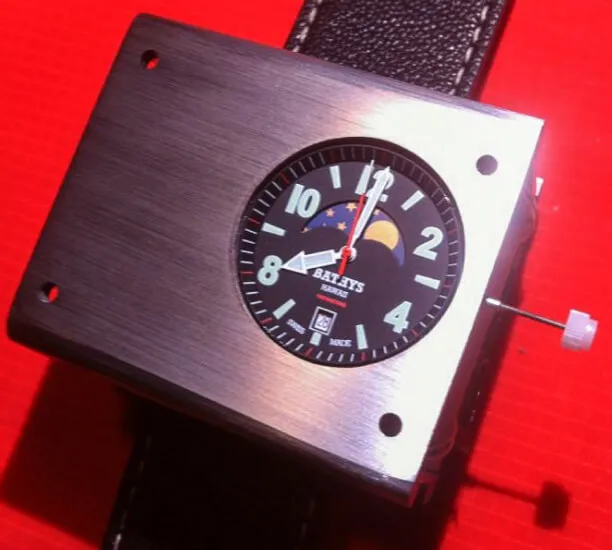
Bathys Cesium 133
The first atomic wristwatch
While it comes from possibly one of the least expected watch companies, Bathys, this is the first atomic wristwatch in prototype form.
There are other watches that call themselves "atomic", but what they do is use radio signals from actual atomic clocks to make time adjustments. This one, the Cesium 133 is an actual atomic watch.
The thing that makes atomic clocks great is the accuracy along the lines one second each 1000 years.
The watch is made possible by the SA.45s CASC (computer chip scale atomic clock) made by Symmetricon. However, this prototype is still a "small" 60mm wide by 50mm tall, and 23mm thick brick for the wrist.
The same module was later used by Richard Hoptroff's Atomic Wristwatch, the No. 16. Which in fairness looked a lot more like a "classic" wristwatch but was still quite big at 83.7 mm wide, a height of 43.4 mm, and thickness of 18.7 mm.
Unfortunately, Bathys is no more and Hoptroff doesn't seem to make wristwatches anymore. Maybe in the future we'll see more of this kind of crazy machines.
Sources
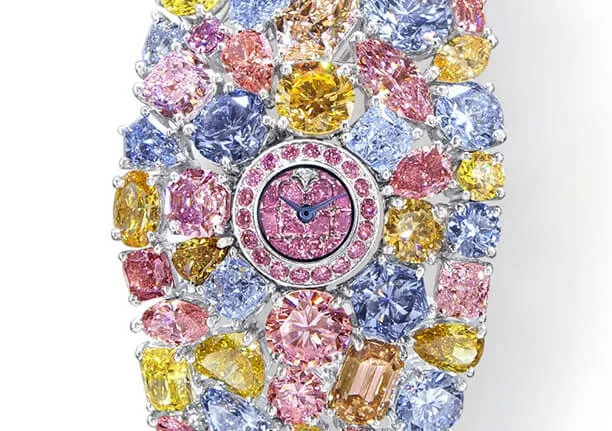
Graff Diamonds Hallucination
The most expensively priced wristwatch
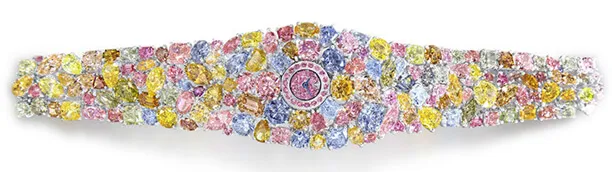
With a price of $55 million, this is, as far as we know, the most expensively priced wristwatch in history. The big mention here is that we couldn't find any mention of it being sold.
It was presented at Baselworld 2014, possibly as very attention-grabbing marketing plan.
The piece is made of 110 carats of rare diamonds set in a platinum bracelet with a small quartz watch in the middle of everything. Is this really a "watch" from an enthusiast perspective? Maybe not but it's still an interesting piece.
At $55 million with 110 carats, it works out at a price per carat of $500.000. I'm no jeweler but it seems like quite a premium for 1carat. I know that is not quite how diamond pricing works but still. Does the price make any sense? I don't know.
The company is a very big player in the world of diamonds and in terms of watches they have made and still make other less bombastic pieces but still mostly focused on the stones and with matching prices.
Sources
Apple Watch
The internet wrist machine
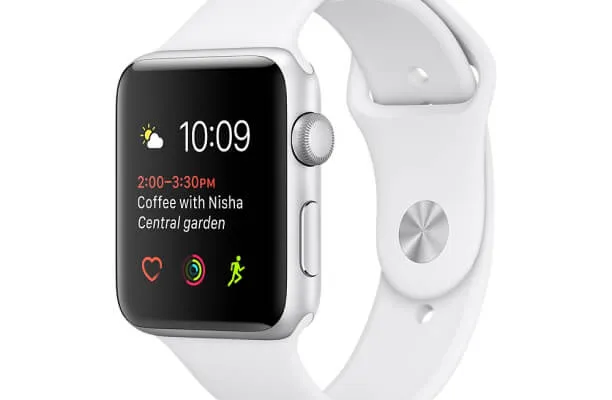
While the Apple watch wasn't targeting traditional wristwatch enthusiast it did re-introduce the concept of a wristwatch to the masses. Some of them converted to traditional wristwatches. For others it was the other way around.
One thing that is for sure it was a big success for apple with an estimated sales volume of over 100 million units with 33 million units sold only in 2025.
Unfortunately, from the way this watch is set up, it's far from something you'd be able to pass down to kids and grandkids and them still being able to use it as you could with a more traditional watch.
Sources
Patek Philippe Grandmaster Chime
The most expensive watch ever sold
Only Watch Auction is an event where one-off watches are auctioned to raise money for Duchenne Muscular Dystrophy research.
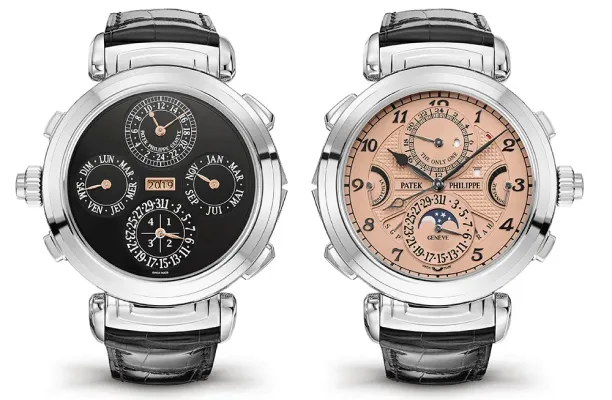
In 2019 at one such auction run by Cristies, the first and only stainless-steel version of the Grandmaster Chime sold for CHF 31,000,000 ($31,194,370 as reported by Robb Report).
To give you an idea of how big this is, a "regular" Grandmaster Chime from Patek will cost an estimate of 3.5 to 5.5 million USD depending on the model.
The watch is not for the small wristed, featuring a 47.7mm diameter case with a thickness of 16.07mm. and it houses 20 complications visible on two watch faces. It was launched in 2014 at a price of $2.5 million.
Sources
Frederique Constant Slimline Monolithic
80 times per second
There have been other watches that offer crazy speeds, there have also been other watches that offered some sort of silicon-based oscillators. So, what are we looking at here?
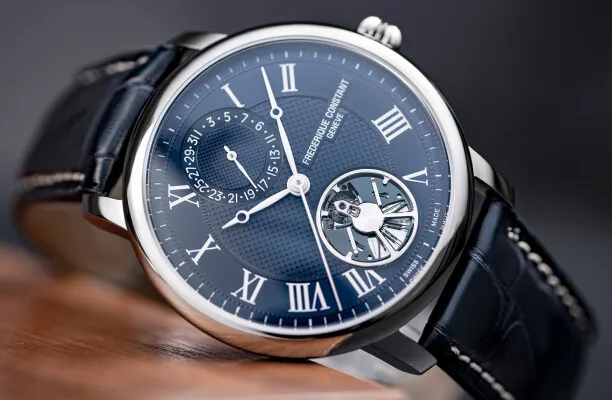
In 2021 Frederique Constant brought to the market a watch with a high-frequency oscillator made from silicon. This works at a silly rate of 288.000 vibrations per hour (or 40 Hz or 80 beats per second), all the time, while having a power reserve of 80 hours and was for a time a regular production watch and and for less than $5000.
Unfortunately, as far as I can tell it's no longer in production but I'm hoping we'll see more of this tech coming back as a regular production model.
Sources
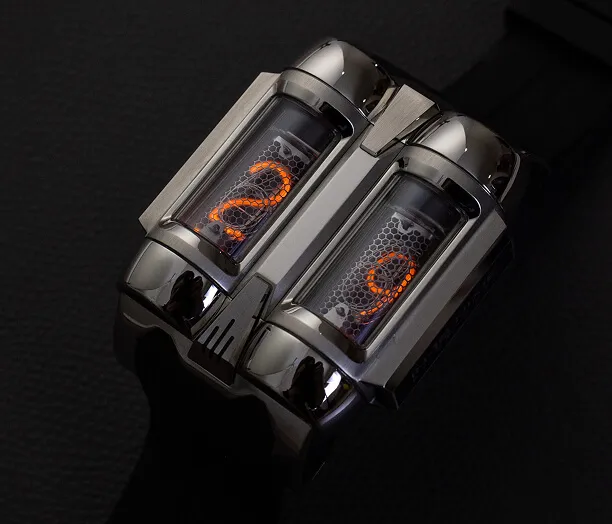
Gelfman IN-16
The nixie tube wristwatch
This is not the first or the most important watch of this type but it's probably the best designed one. There have been plenty of other watches made by various people before, but the design always felt a bit hacky.
The Nixie tube is among the first solutions for a digital display that did not involve mechanical parts. It's made from a tube that contains wires in the shape of the characters it needs to display.
Unfortunately, these tubes are quite large, so it is a challenge to create a wearable watch with such a display. The Gelfman is 45.9mm in width, 47.8 mm lug to lug and 20.5 mm thick.
Sources
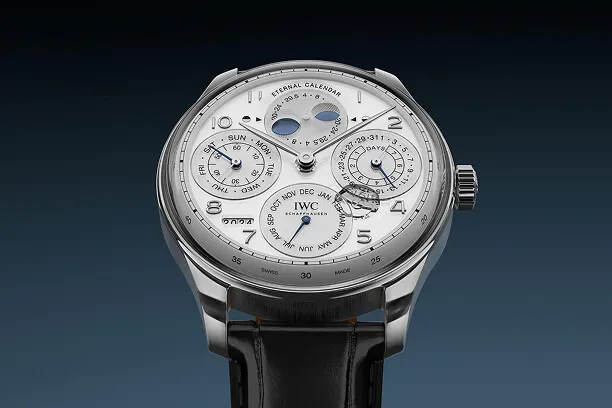
IWC Portugieser Eternal Calendar
The 45 million years perpetual calendar
We are accustomed to the idea of perpetual calendars by and you are also probably aware that most of them, if not all, would need some adjustment in year 2100.
The difficulty of a perpetual calendar is the leap year; every four years one extra day is added at the end of February. To make matters worse, there is a century exception, if the year is divisible by 100 but not by 400, it is not a leap year. To make matters even worse there is also a 400-year exception, if a century year is divisible by 400, it is a leap year.
So, with everything into account 1900 was not a leap year, but 2000 was. 2100 will not be a leap year. 2200 and 2300 also won’t be leap years and then the year 2400 will be.
If you guessed that 2100 will be a problem because perpetual calendars will assume it is a leap year, you are correct.
The mad people at IWC came up with a plan, skip 3 leap years across a 400-year period. So, 2000 leap year, 2100 skip, 2200 skip, 2300 skip and then 2400 again a leap year. And so on.
They do this with a special gear that rotates once every 400 years and has indentations for those 3 years that need to be skipped.
This whole thing means that the calendar will be accurate for 45 million years. If that is not mind boggling enough, there is more.
They came up with a new way of building the moon phase complication so that will only deviate by a single day after 45 million years. If nothing happens to the moon in the meanwhile I suppose.
For this second madness they simulated over 22 trillion possible gear train configurations. Now I'm really curios of what comes next from them.
Sources
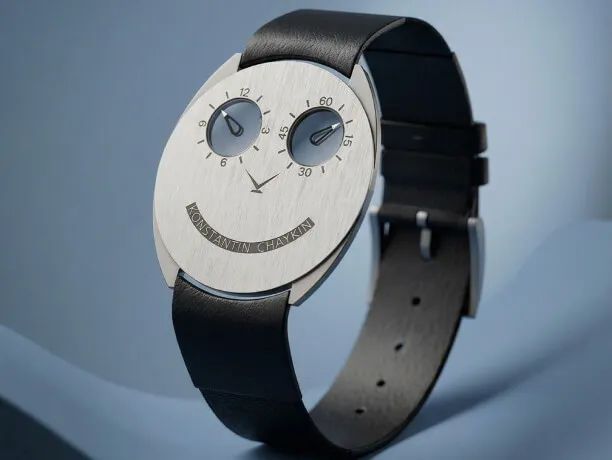
Konstantin Chaykin ThinKing Mystery
The thinnest wristwatch
For a while now there has been a battle in the watch industry between some of the giants of watchmaking. Luckly there were no casualties. Among the fighters there were JLC, Piaget, Bulgari and Richard Mille. JLC dropped early smelling the horrors of what was to come.
It was the battle of the thinnest watches, and it only grew fiercer and fiercer since 2013 when Piaget pulled out the Altiplano 38mm 900P; a thin wristwatch at only 3.65mm. They were all about shaving millimeters and chewing bubblegum. And they were all out of bubblegum.
Another blow came in 2018 with the Piaget Altiplano Ultimate Concept a 2mm thick machine for the wrist. They wanted to cement themselves as the ultimate slim wristwatch makers.
Bulgari wasn’t having it and in 2022 they dropped the Octo Finissimo Ultra at 1.80mm. They were no strangers to the game but started backwards, with the complicated stuff, minute repeaters, chronographs and the likes.
But hold on, Richard Mille saw the whole thing and said to Bulgari: "Hold my tourbillion!" and pulled out the RM UP-01 Ferrari at only 1.75mm and with a horse on the face of the watch. The world was cheering.
Bulgari pushed back with Octo Finissimo Ultra COSC at 1.70mm. The battle was not over.
Then in 2024, in the heat of everything we saw a smiling face enter the ring, a small watchmaker by comparison to the giants at war.
Konstantin Chaykin entered the building with a 1.65mm wristwatch. Things became quiet. We’ll see for how long.
The ThinKing Mystery introduced was a prototype, but it sold for CHF 508,000. A few tweaks here and there (more like a full rework of the watch) and we now actually have a production version with 12 pieces available.
The watch comes at a wearable 41mm in diameter, a grand 1.6mm height, has a 38-hour power reserve and comes with a special device to wind the watch. Can we go even further, even thinner? Only time will tell.
Sources
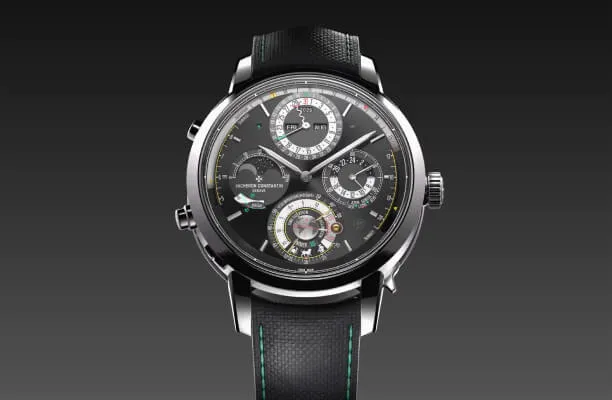
Vacheron Constantin Solaria
The most complicated wristwatch
Want to see the position of the Sun in real time on your wrist? Or maybe calculate the time it takes for a constellation or a given star to appear centered in your field of vision? You also have a giant wrist?
This is no doubt an incredible achievement, packing 41 complications in a wristwatch that is 45mm in diameter and 14.99mm in height. You need to have a big wrist but for some people it is wearable and it’s not even the largest wristwatch we’ve seen.
The movement itself, called the Calibre 3655, measures at 36mm in diameter, 10.96mm in thickness, is made up from 1,521 components, uses 204 jewels, runs at 3Hz and has 72-hour power reserve.
As reported, it was made by a single watchmaker, and it took 8 years to make. A lot of things had to be reworked from how they are traditionally made, which led to 13 patent applications.
I won't list the complications here but there is great write-up from Hodinkee that goes into more detail about the watch and has the full list.
Sources
The story continues
This journey is not over, we will continue to expand this collection so check back every now and then.
Share this page Continue with Google